Technological Deadlock: Why Russia Cannot Restart Strategic Bomber Production
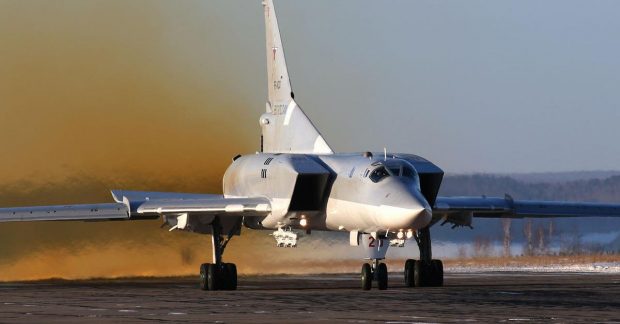
Expert Anatoliy Khrapchynskyi explains why Russian aviation relies on Soviet stocks and how sanctions and lost technologies prevent the production of new aircraft.
 🛡️Security
Photo: UNIAN
Key points
- Russia is unable to produce new NK-series engines for its strategic bombers.
- The Tu-160M project relies on finishing old Soviet airframes due to lost titanium welding tech.
- Sanctions have halted the development of new A-100 AWACS aircraft.
The Russian Federation is facing insurmountable obstacles in its attempts to restart the mass production of strategic bombers, which are the primary carriers of missile weaponry. According to Anatoliy Khrapchynskyi, a reserve officer of the Ukrainian Air Force, the current "might" of the enemy's aviation relies solely on Soviet heritage and the gradual depletion of the lifespan of old airframes. For residents of rear cities like Lutsk, this means the enemy is forced to be increasingly selective with the flights of its heaviest aircraft.
Technological Gap and Engine Shortages
The main problem for Moscow remains the inability to recreate the full production cycle of aircraft engines. There is a critical shortage of NK-12MP turboprop engines for Tu-95MS aircraft and NK-25 units for supersonic Tu-22M3s. According to the expert, the Soviet aviation industry was based on the cooperation of many enterprises, unique metallurgy, and machine tool parks that modern Russia has either lost or failed to modernize. Every combat mission with a full load of Kh-101 missiles burns through the aircraft's structural resource much faster than peacetime regulations dictate.
Even highly publicized projects like the Tu-160M face difficulties. Khrapchynskyi explains that completing old Soviet airframes is merely an imitation of restarting production. Creating new titanium center-section beams using electron-beam welding in a vacuum is an extremely complex task for which competencies have been largely lost. Consequently, Russian aviation is forced to resort to "cannibalization," dismantling some aircraft to keep others operational.
Logistics Collapse and Sanctions Pressure
The situation for the aggressor is worsened by successful operations of the Ukrainian Defense Forces. Specifically, strikes on the Taganrog Beriev Aviation Scientific and Technical Complex have significantly limited Russia's ability to repair and modernize long-range aircraft and A-50 radar planes. The new A-100 "Premier" project has effectively stalled due to sanctions on Western microelectronics, as creating a modern radar based on civilian chips from "grey imports" is technically impossible.
Regarding ground-attack aviation, Russia also lacks full-scale production of new Su-25s. During the Soviet era, the main production facilities were located in Tbilisi, while only trainer-combat versions were produced in Russia. Modern Su-25SM3 modifications are merely deep modernizations of old airframes whose lifespan is not infinite. Thus, the total number of "living" strategic aviation airframes is becoming a hard limit for future missile volleys.
Source UNIAN — unian.ua/weapons/rosiya-maye-obmezheni-mozhlivosti-vidnovlyuvati-st… ↗
Read next
 💡Tech
Snow and daytime frosts: what weather to expect in Ukraine this week
This week in Ukraine will bring unstable weather featuring snow in most regions, rains in the south, and daytime temperatures ranging from -6 to +12 degrees Celsius.
 💡Tech
Samsung Brings Galaxy Interface Closer to iPhone with New Notification Design
Samsung is testing an updated live notification interface for the upcoming Galaxy S27 series, drawing comparisons to Apple's Dynamic Island.
 🧠AI Analysis
Mild Winter 2026: Climatologists Forecast Warmer December Weather
According to preliminary forecasts, December 2026 in Ukraine is expected to be warmer than the climate norm, though short-term frosts and snowfalls remain possible.
 🧠AI Analysis
The smallest owl in Ukraine, the Eurasian pygmy owl, spotted in the Chornobyl Reserve
Researchers at the Chornobyl Reserve have recorded the smallest owl species in Ukraine — the Eurasian pygmy owl. This bird is notable for its daytime activity and habit o…
 👥Society
Famous actress Olha Sumska searches for owners of a lost dog in Kovel
During her tour in the Volyn region, Ukrainian actress Olha Sumska spotted a friendly stray dog in a Kovel park and urged locals to help find its owners.
 🛡️Security
Electricity supply restored in Sarny district following enemy attack
Power has been fully restored in the Rivne region after energy infrastructure was damaged during the November 20 attack.